

This is a link to Muriel Rukeyser’s book that I deconstructed for my art journal project: https://www.themarginalian.org/2020/12/14/muriel-rukeyser-the-life-of-poetry-in-crisis/
Having come to this place
I set out once again
on the dark and marvelous way
from where I began:
belief in the love of the world,
woman, spirit, and man.

Having failed in all things
I enter a new age
seeing the old ways as toys,
the houses of a stage
painted and long forgot;
and I find love and rage.

Rage for the world as it is
but for what it may be
more love now than last year
and always less self-pity
since I know in a clearer light
the strength of the mystery.

And at this place in the ways
I wait for song.
My poem-hand still, on the paper,
all night long.
Poems in throat and hand, asleep,
and my storm beating strong!
from The Green Wave by M. Rukeyser (1948)
This link has most of the pages as they were being developed. This video explains the project: Mind’s Eye in Progress video
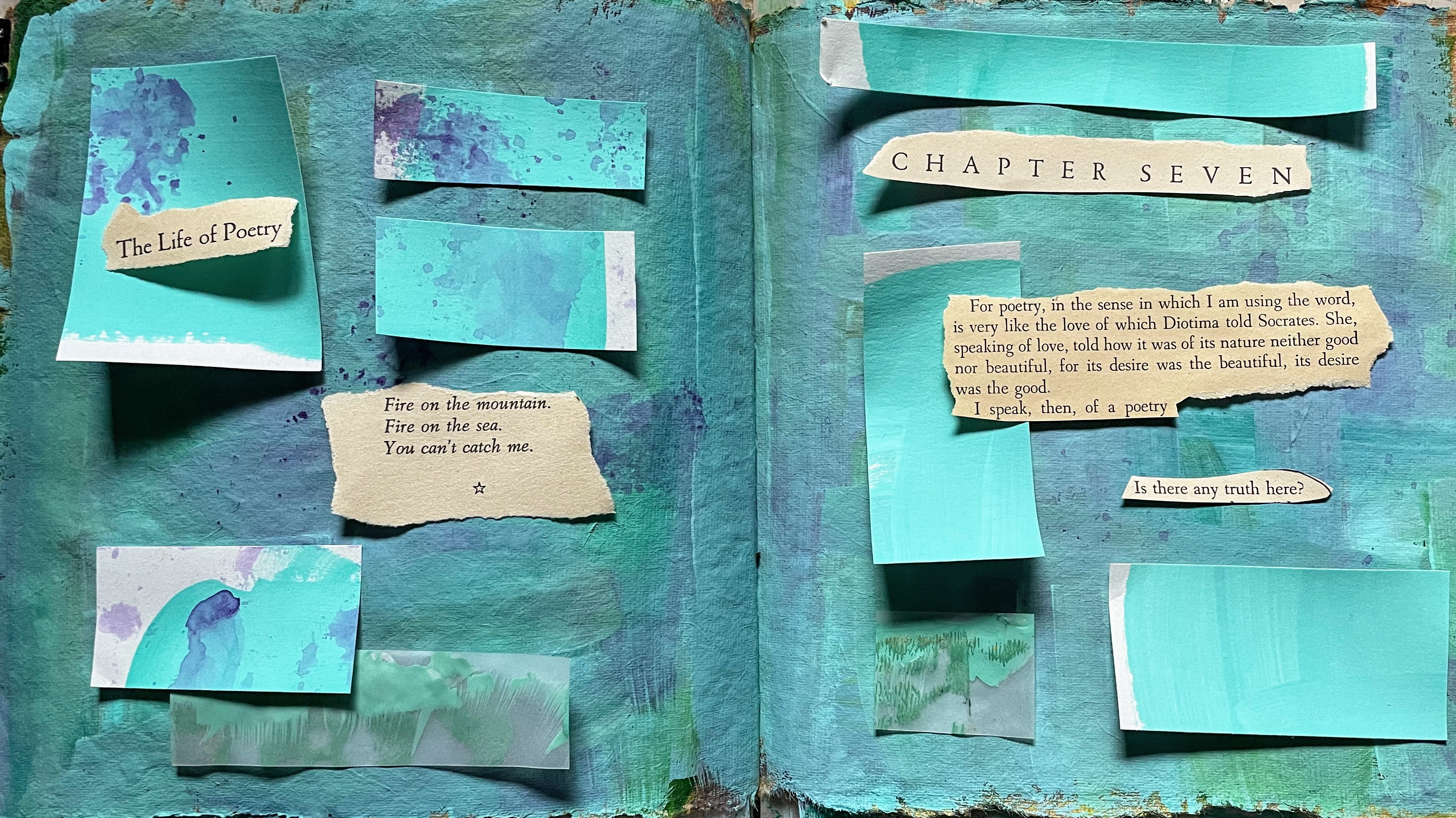
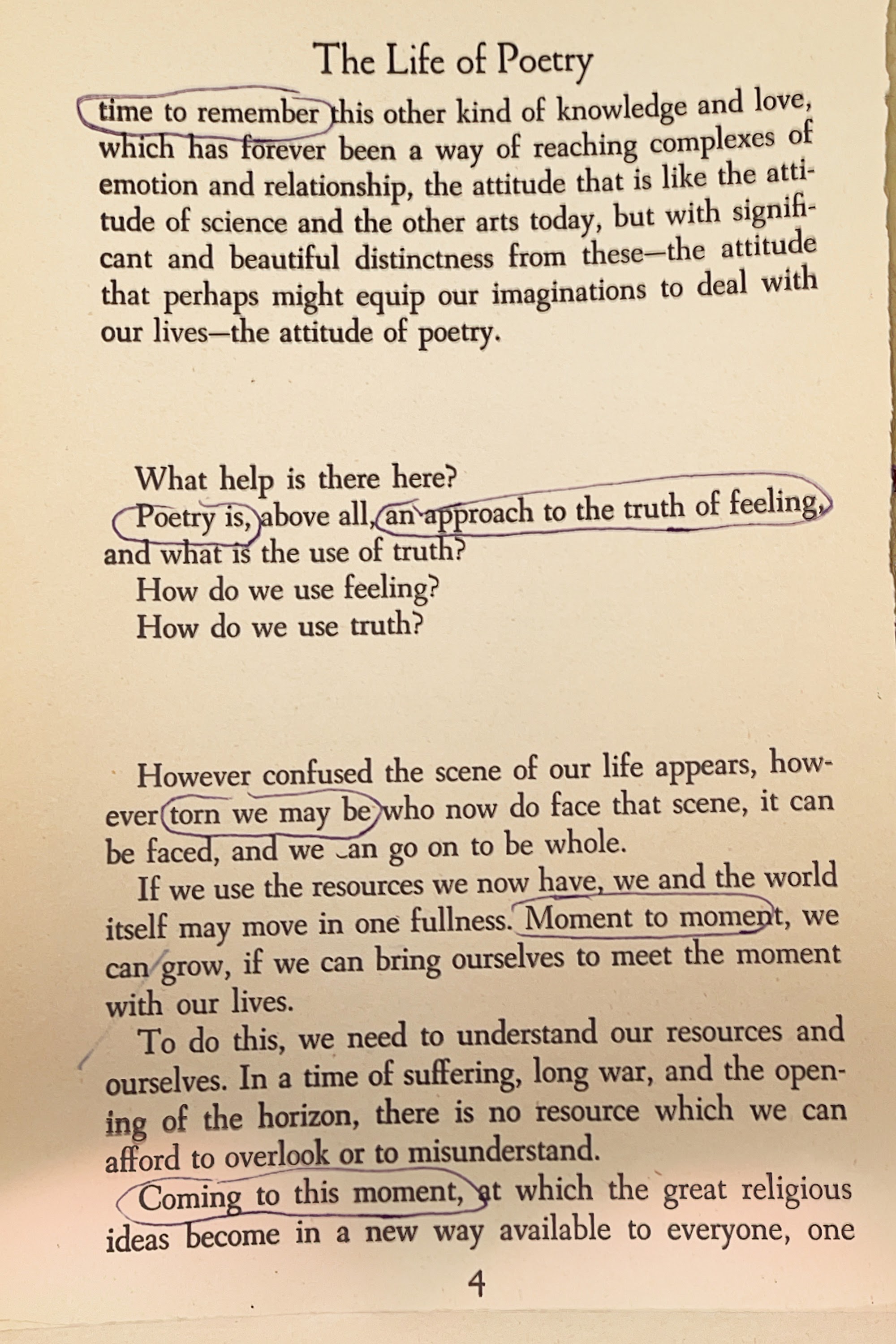
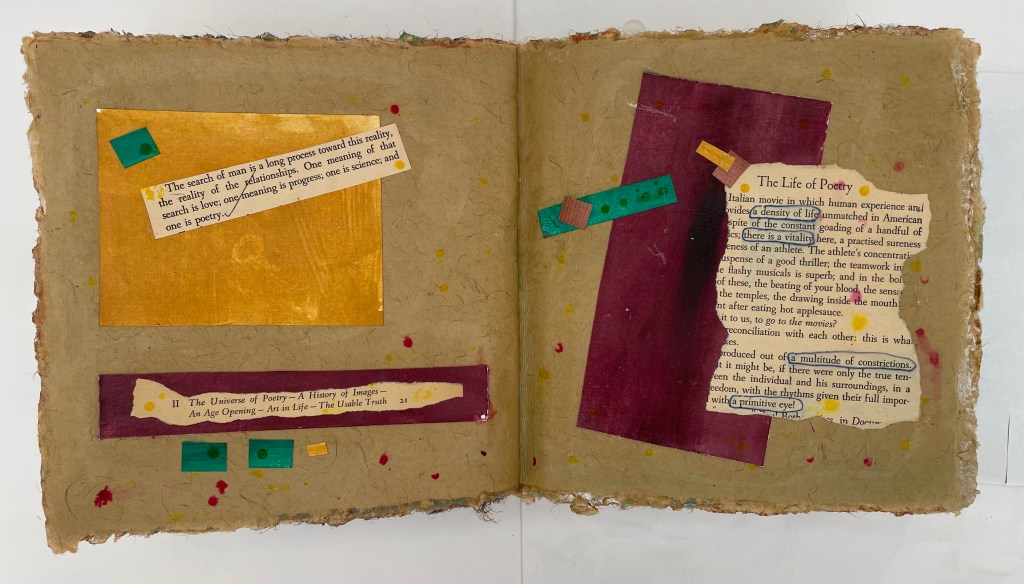
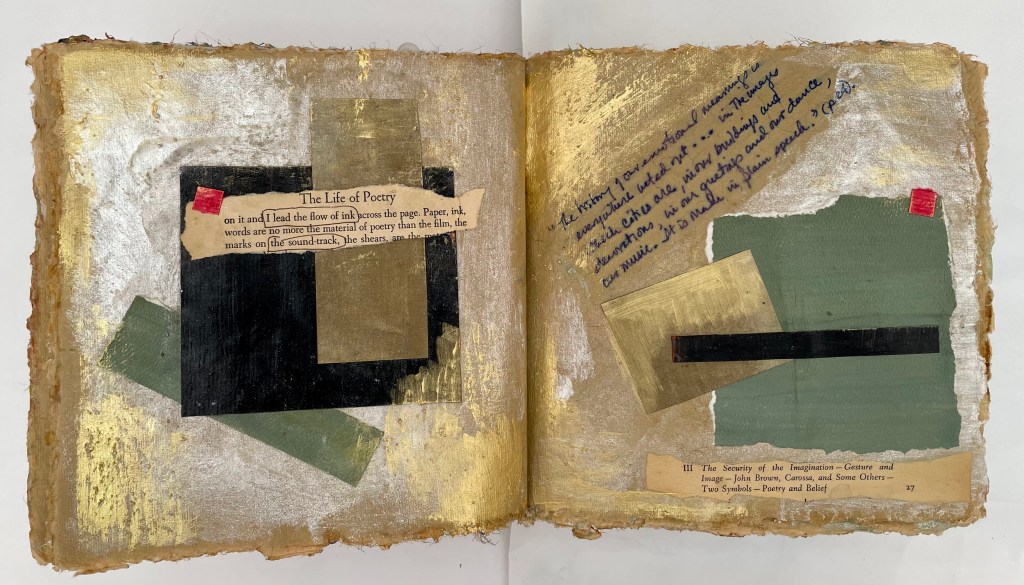
A little over a year ago, I started working in an art journal using the book The Life of Poetry written in 1949 by Muriel Rukeyser. Attracted by the title, I bought it several years ago from Dawntreader’s Bookstore in Ann Arbor for $2.50. It almost immediately fell apart. the pages were dry and crisp and falling out of the paperback binding. I was unable to read it through, but I couldn’t bring myself to toss it. The book, I discovered, was a series of lectures she gave during the 1940s. I worked my way through some chapters, thinking I might use quotes as prompts for poetry. Many of the popular cultural references were not familiar to me, but enough of the book resonated that I circled passages. Later, many of these ended up on the pages of the art journal I began in July 2021. Before my accidental book purchase, I had never heard of Muriel Rukeyser, so I was excited to learn that she was a progressive, a feminist, a poet, writer, and lecturer.
My journal is leatherbound, hand-made paper from Teresa Merriman, an artist I met at the Ann Arbor Art Fair in 2019. The journal was so beautiful that I was intimidated to even begin to fill it up. And with what? I’ve been interested in art journaling since the early 90s, when I became acquainted with the Journals of Dan Elden, a young photojournalist who was killed in Mogadishu in 1993 by US Marines who thought they were bombing warlords during the famine in Somalia. I studied Dan’s journals, talked to his mother and sister about his work, and included references to it in my master’s thesis entitled “Dialogues with the Imagination.” I circled back to these ideas in the summer of 2021 when I had some time off to focus on how to fill pages.
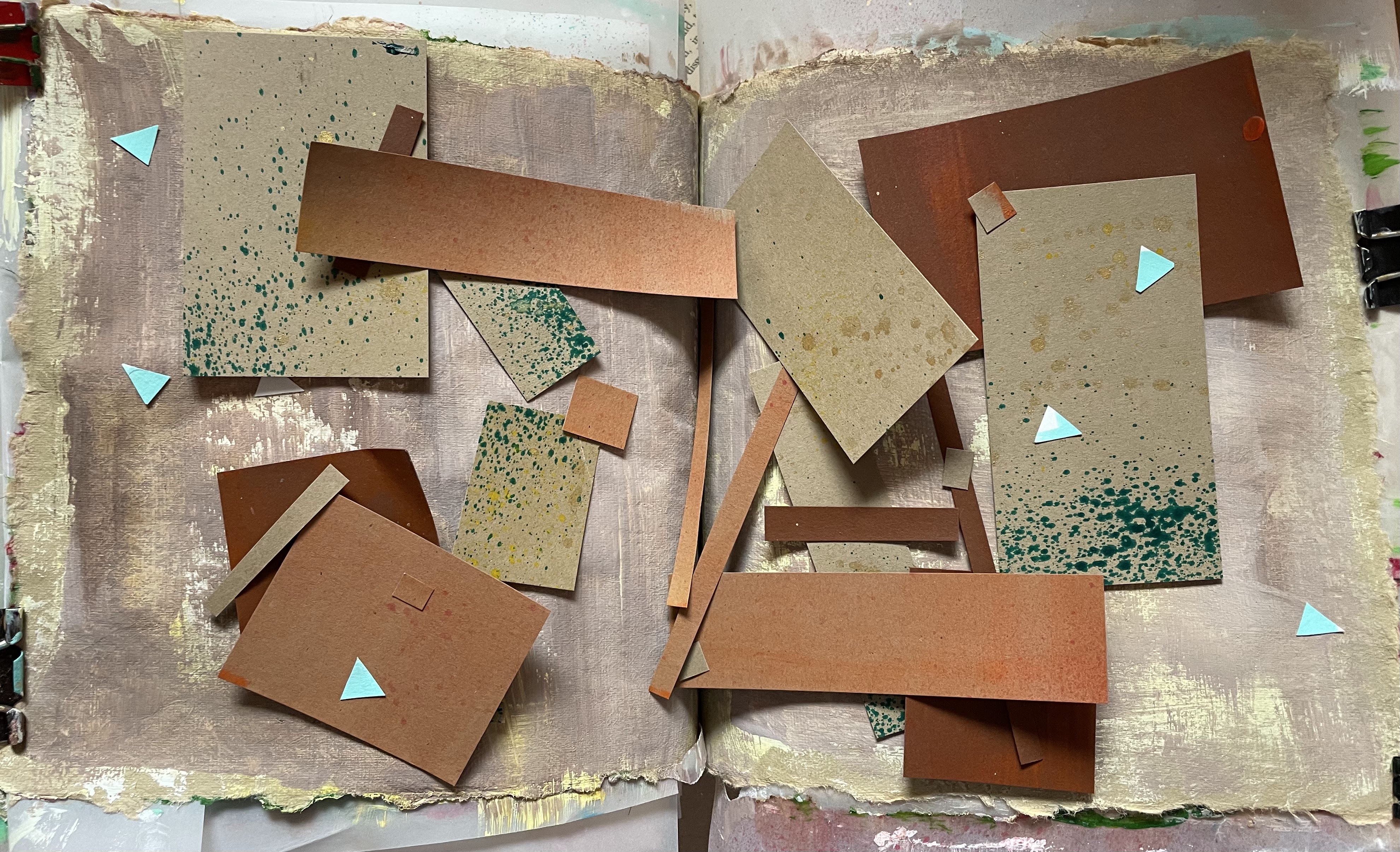
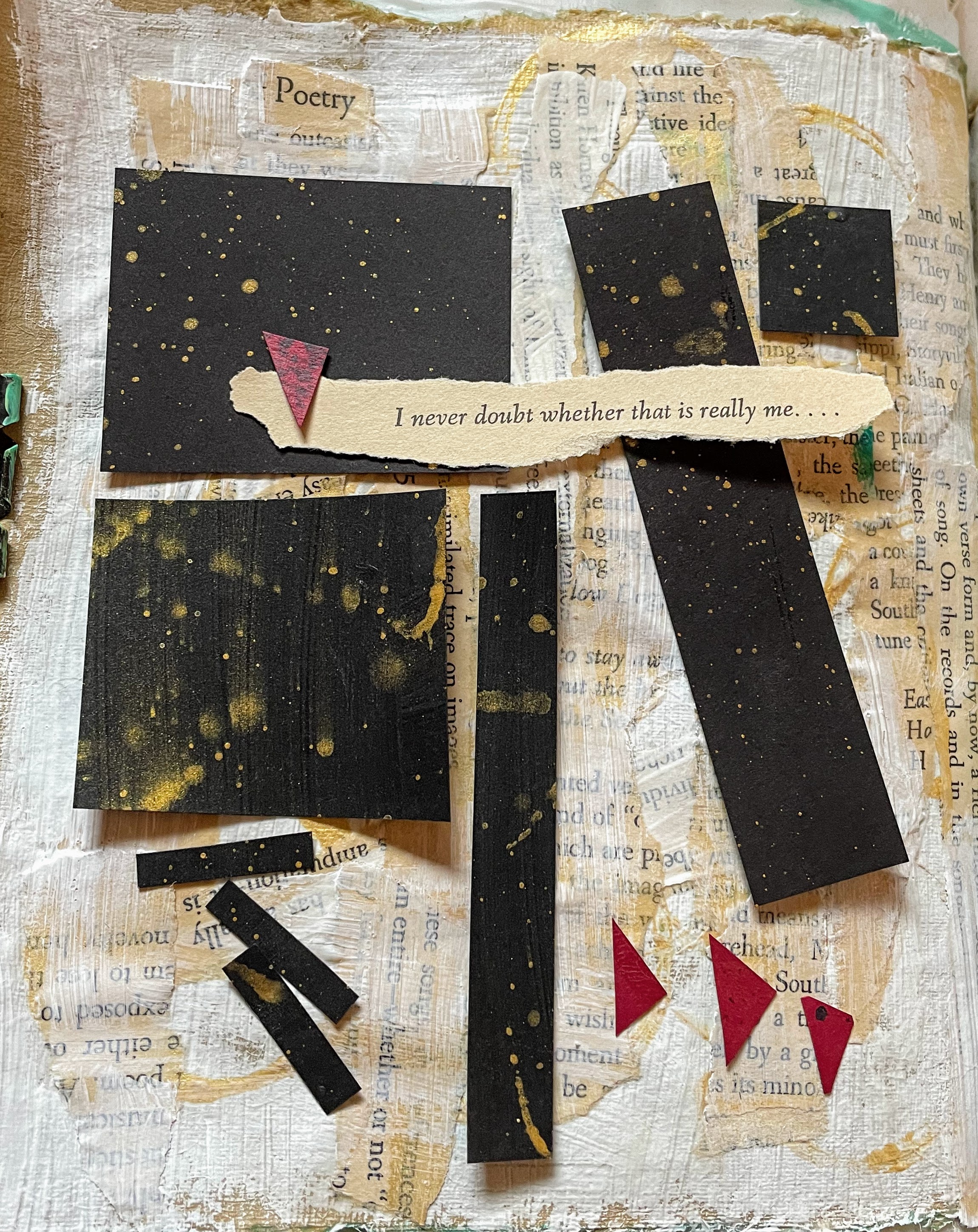
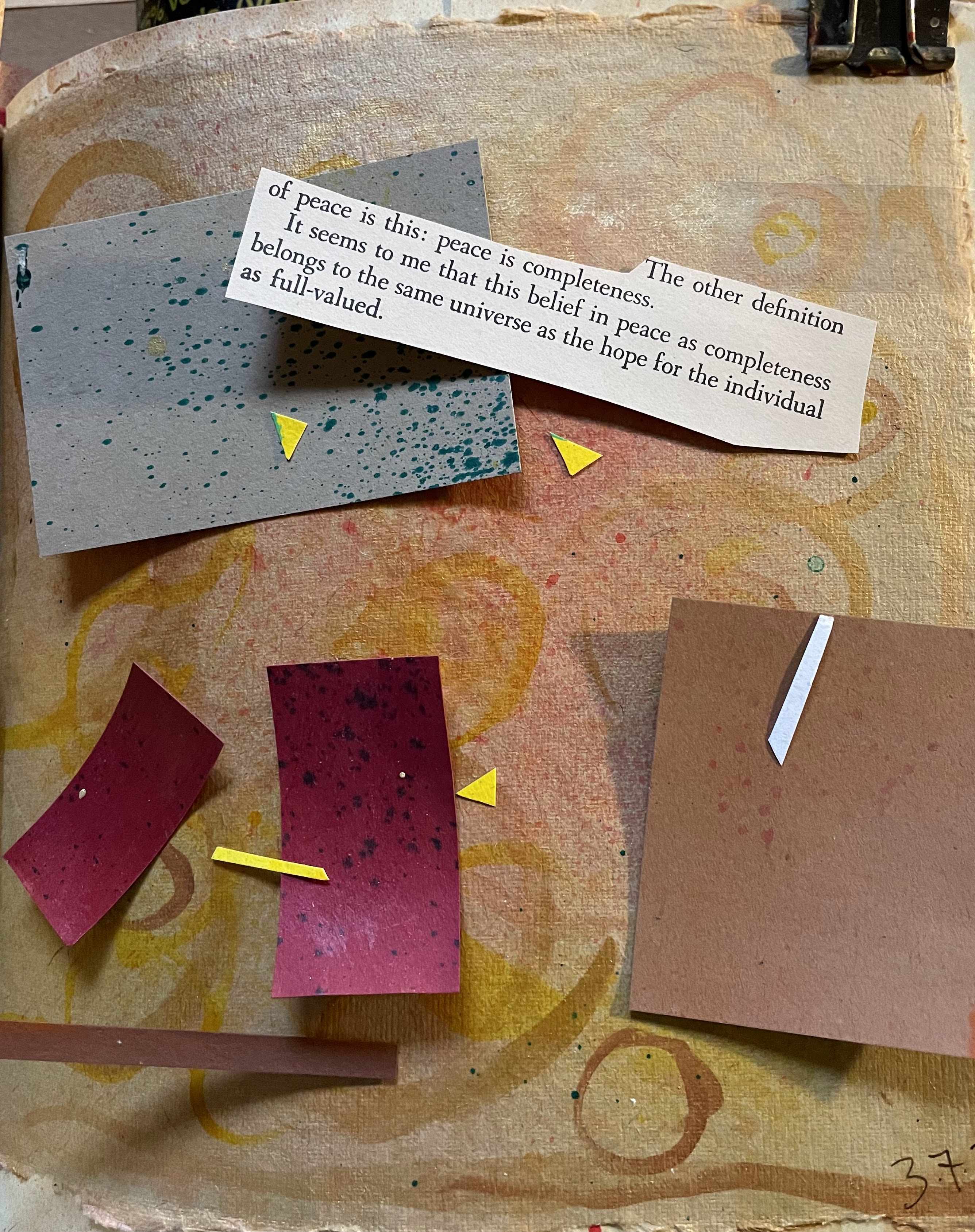
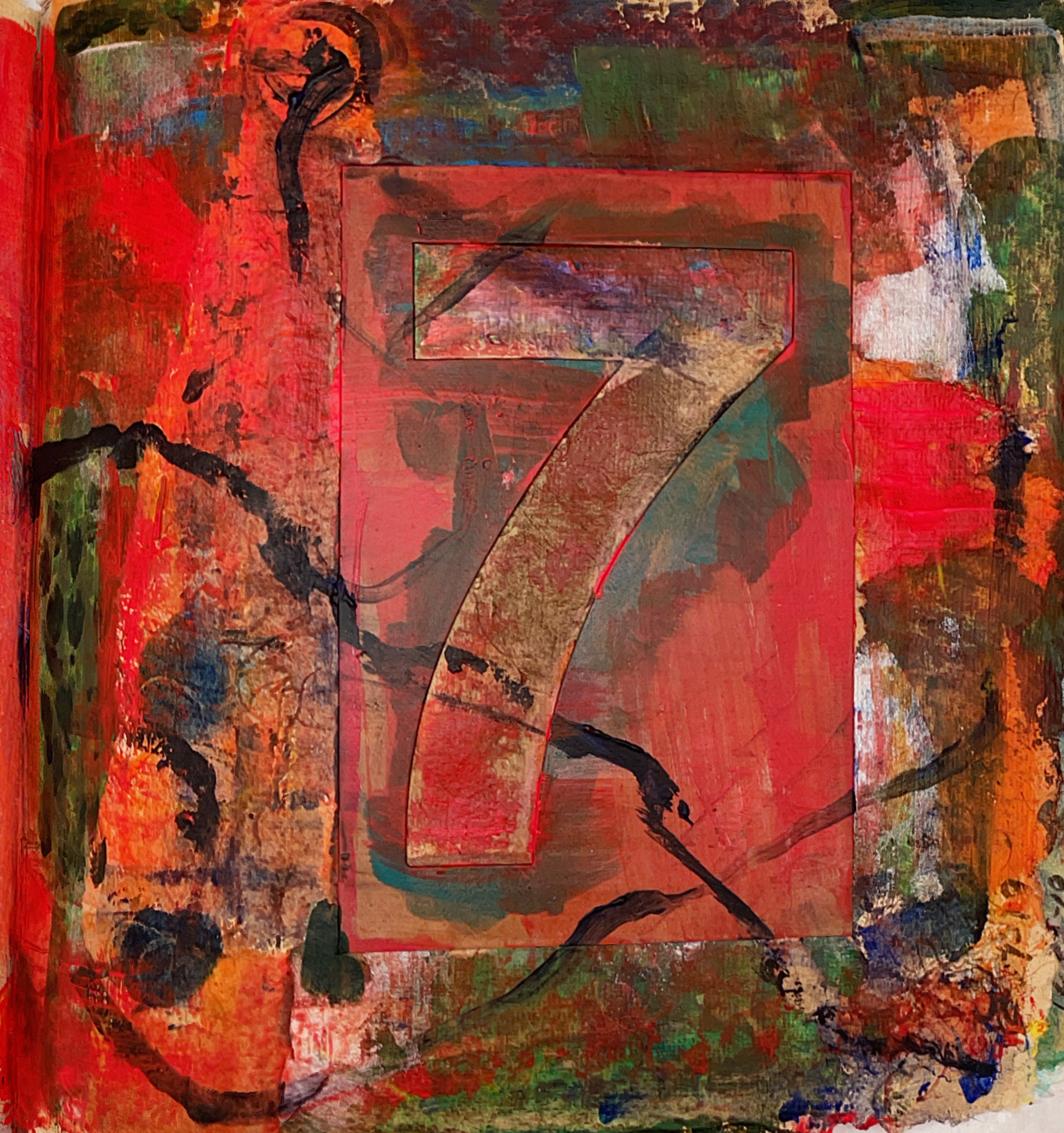
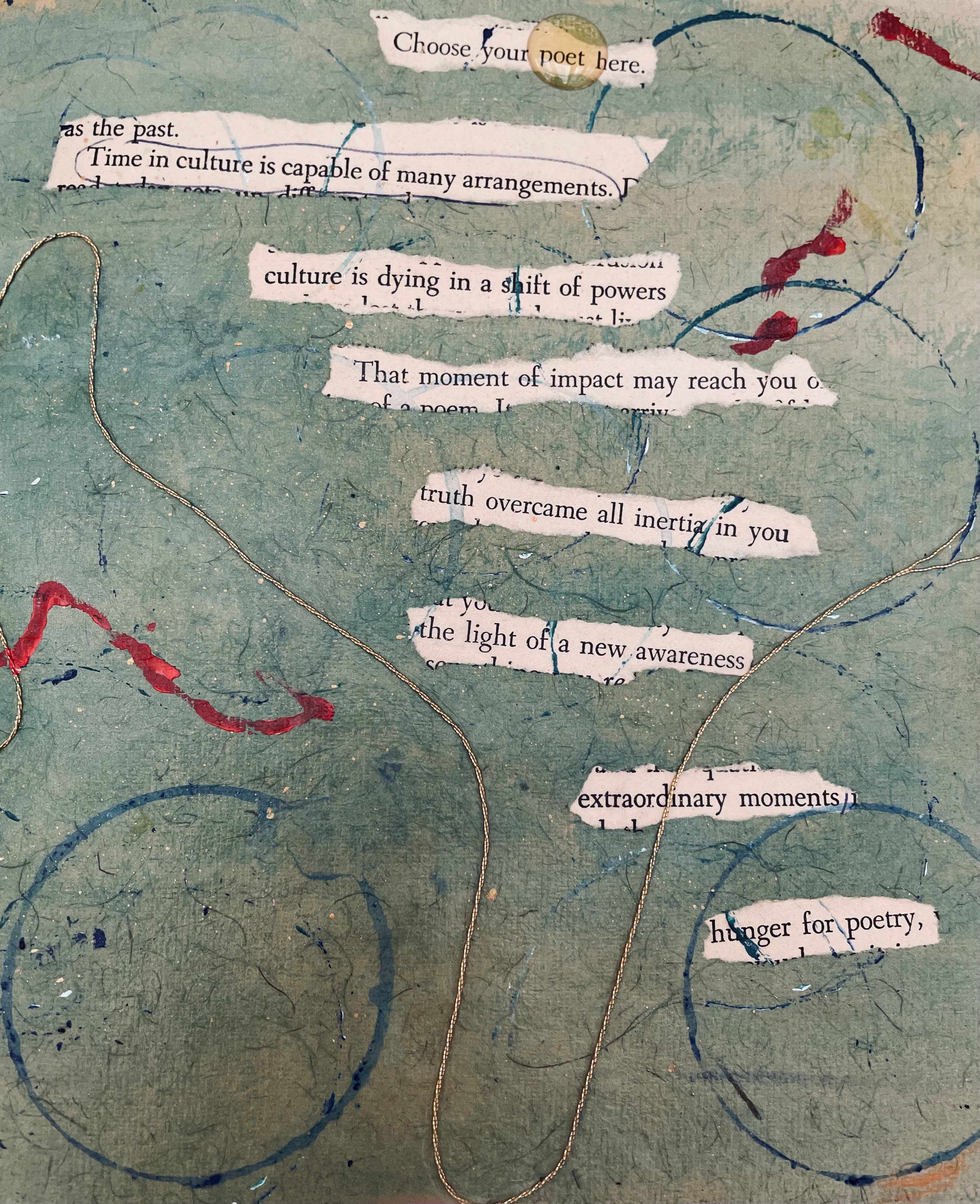
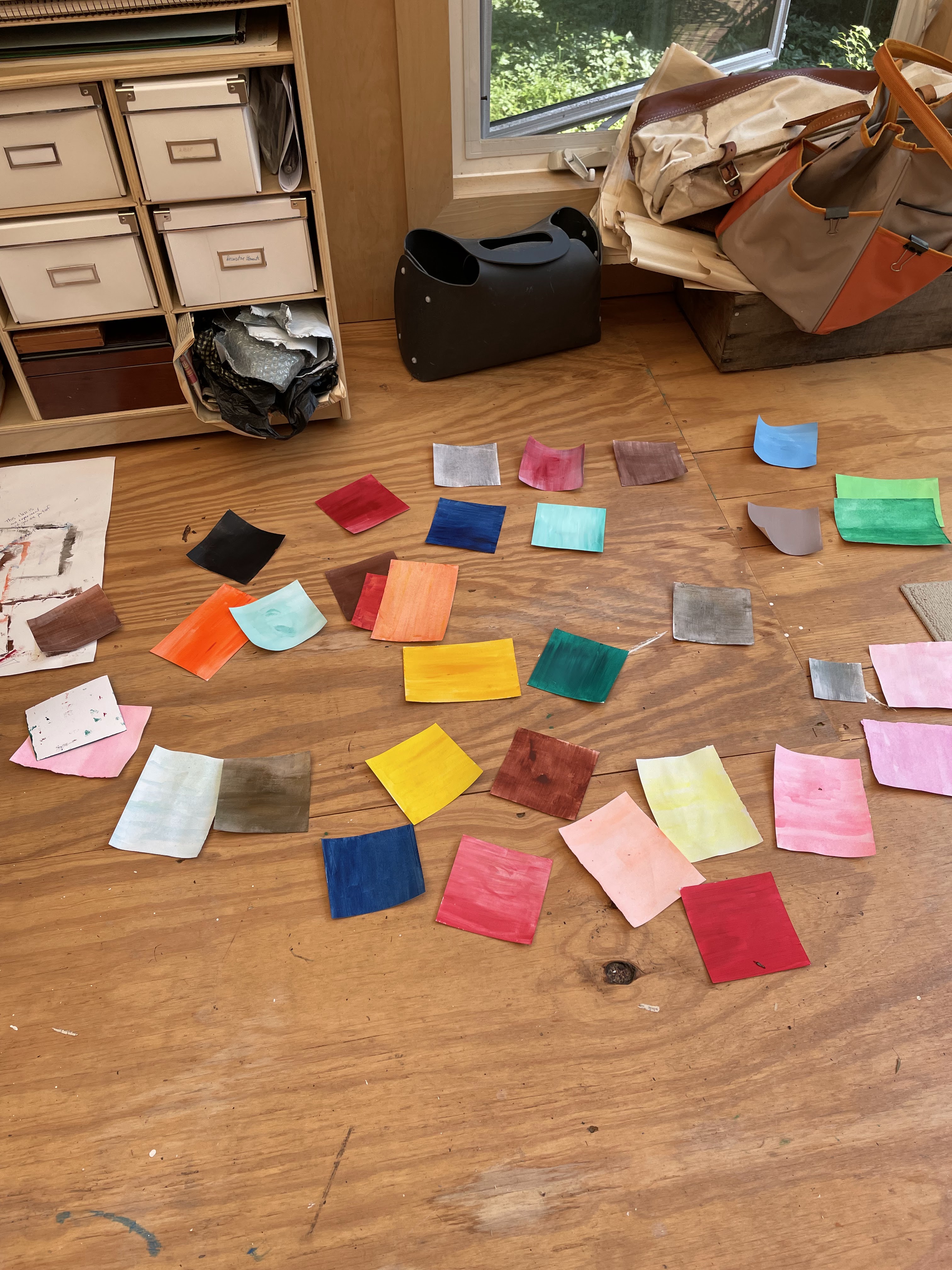
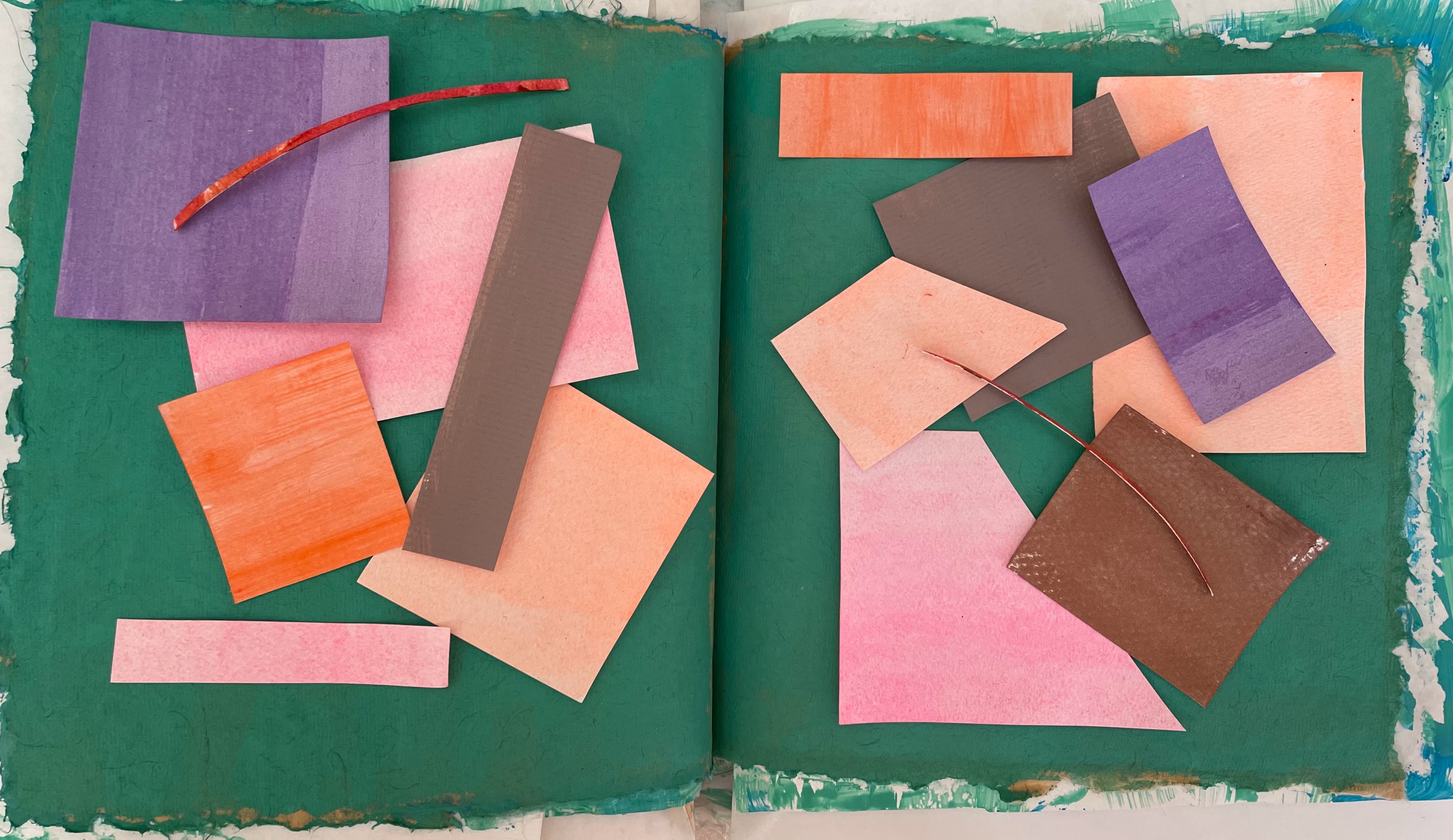
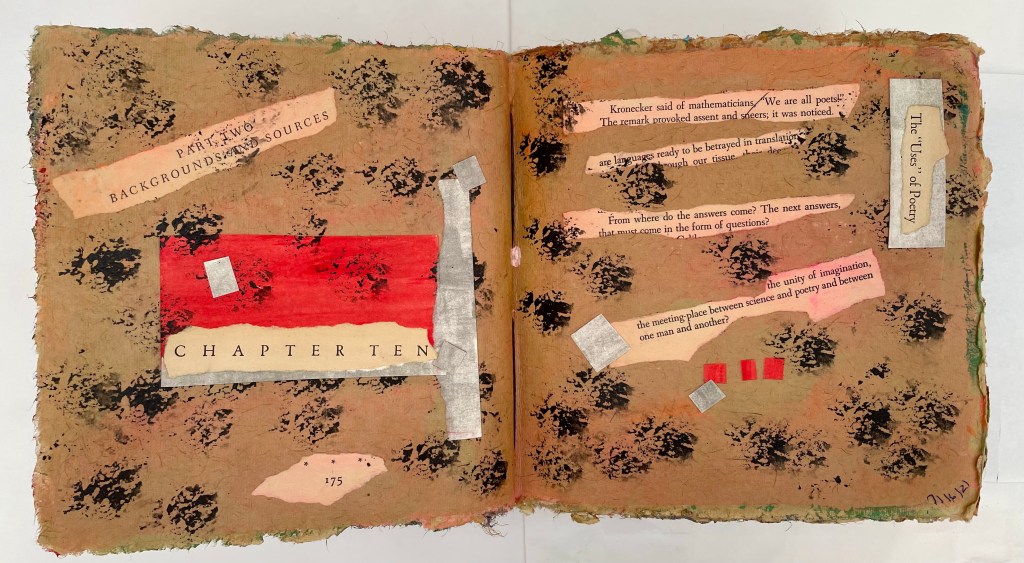
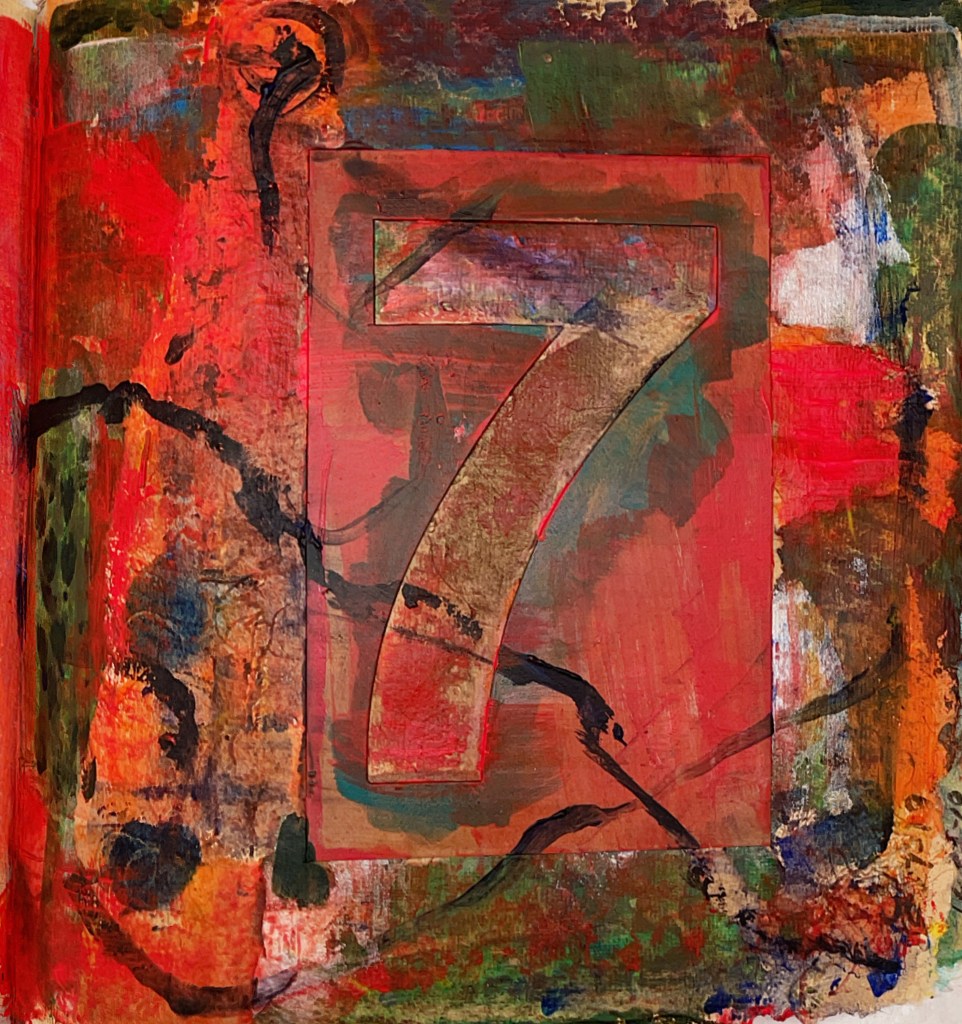
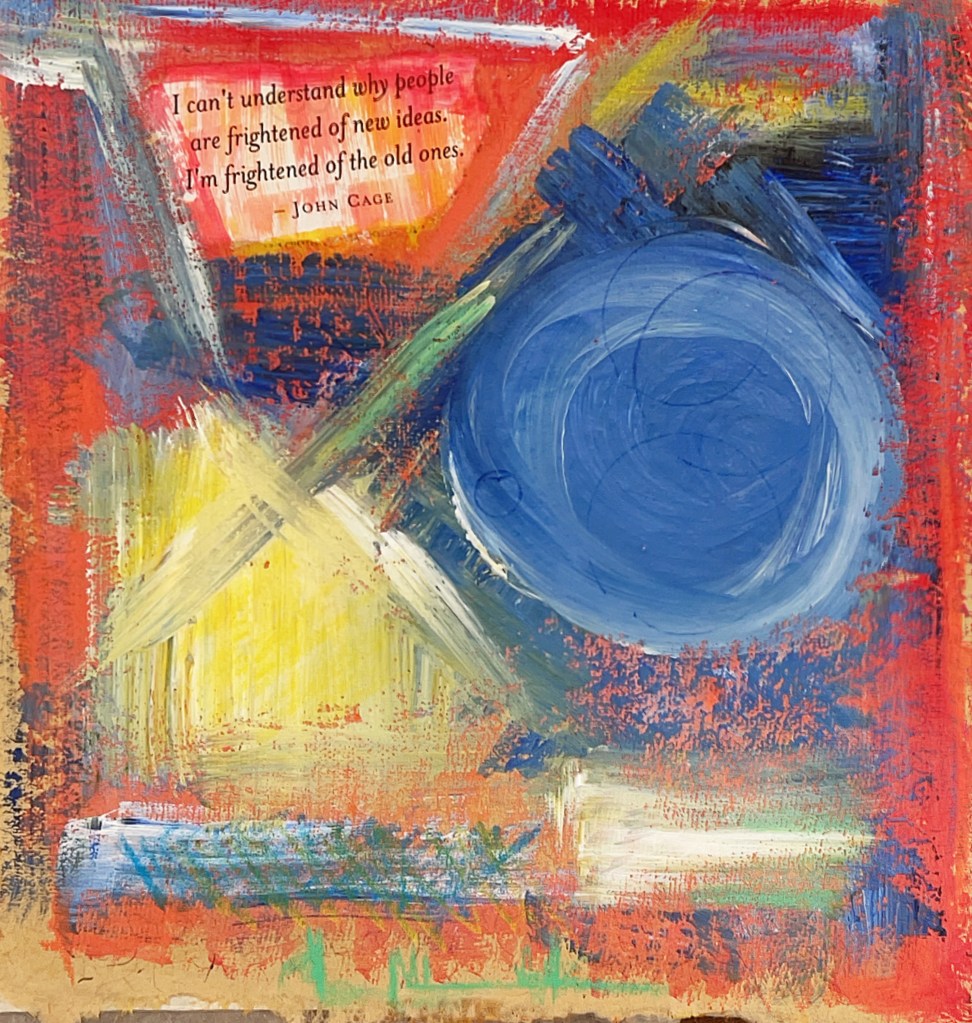
That summer, I discovered I could work each day in a different way and embraced a process that produced consistently satisfying work over the summer and fall. I lost a bit more of the fear and perfectionism each day I worked. When I didn’t know what to do, I sifted through the pages of the Rukeyser’s book, or I sorted through scraps of colored paper. Since I hate wasting paint, I used every bit by painting squares that I could use down the road. I threw them on the floor of my studio to dry, and the floor became my palette–but a dry one I could move around. Early on, I made the decision to have fun with it. I decided that each double-page spread should be related–almost as one image. Gel medium needs time to dry, which was very helpful because I had to work in sprints; this forced me to be more patient and deliberate. Pick a palette, create a background of textures, arrange the shapes, choose the text, and embellish with metallics or spatters. I developed a vocabulary of arrows, dots, rectangles, and squares that would move the eye across the pages. I photographed my progress. There are only a few pages left, so I spent some time with Rukeyser’s poetry. I have to say I was inspired by the fact that some of it is not that good. In The Speed of Darkness, there are a few that stand out. It’s encouraging, actually. I’ve just begun reading from her collection Out of Silence and these poems are contemporary, powerful, and authentic. I plan to use some as prompts for my own. Below are a few images from my journal when it was in progress.






I lost this for a while and I can’t believe it’s been this long. I’ve made a bit of progress, but not as much as I would like. I’ve collected photos and written a few scenes of Act 1. I think I’ll begin 2019 with a more regular use of this venue. I promise . . .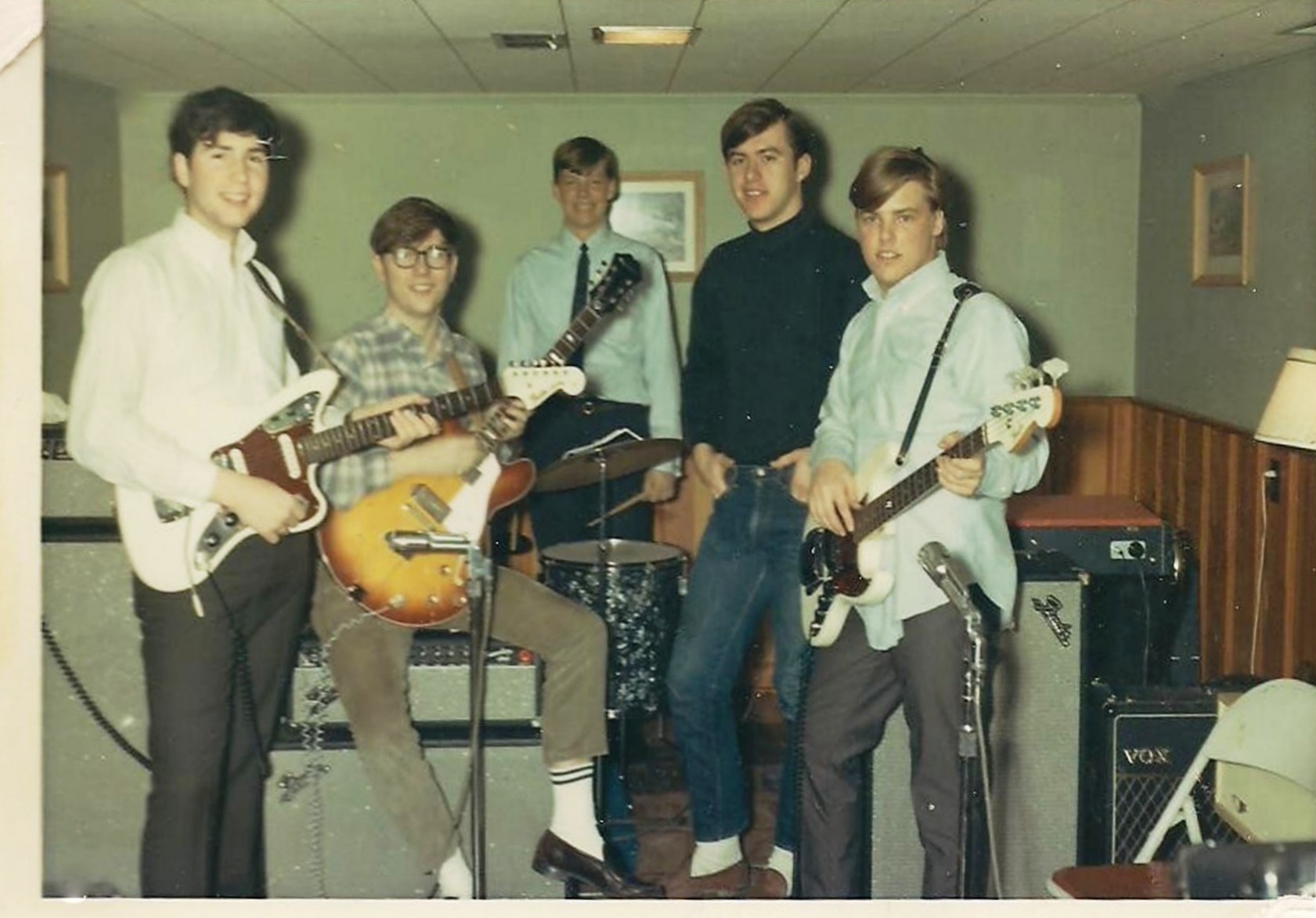
After reading Dick Wagner’s book, I decided to use him in the mix for my main character, too. The problem now is not plot or characterization … It’s writing credible dialogue that does not grate the ear. Will work on that…
Reading Dick Wagner’s book.
Gary Moore explained why he parted ways with the iconic instrument:
“It’s a long story. The instrument itself was a very special instrument, obviously. But it got to the point where I couldn’t take it anywhere. I didn’t want to sell it. I had to sell it for various reasons because I injured my hand a few years ago and the insurance didn’t pay up, and I had to cover the tour costs for canceled shows with my own money, and I didn’t get paid for any of the shows, obviously, or for anything. I ended up with debt. So it was kind of a financial thing, really, and that was the quickest way to do anything about it. So I never wanted to sell it. I mean, why would I? I kept the other ’59 Les Paul and I sold that one. That guitar was played by Jimi Hendrix, Jeff Beck, Rory Gallagher played it, and I’ve played it. It was a very special instrument. Les Pauls are all so different. That one is a big old battle axe. Peter Green never really liked that guitar because the neck was too big. He wanted me to have it because he said he wanted it to go to a good home.”



 stalkingart